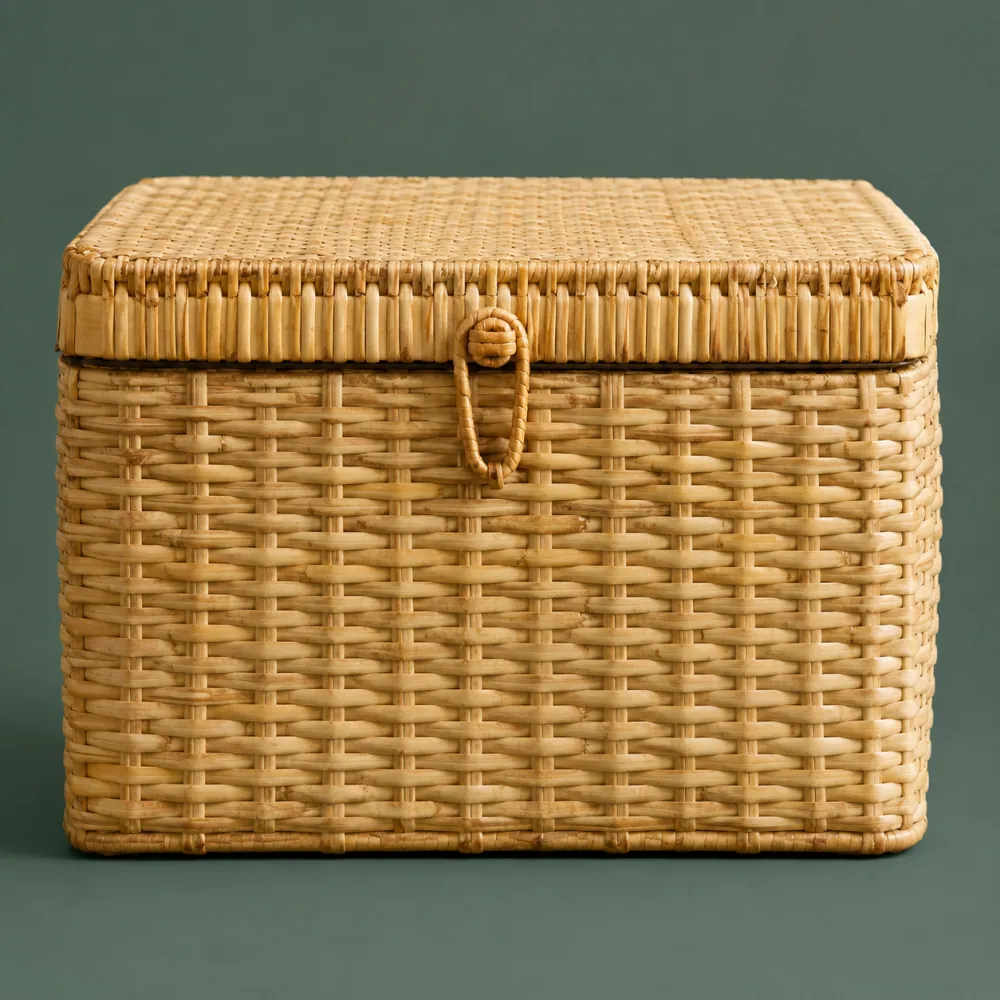
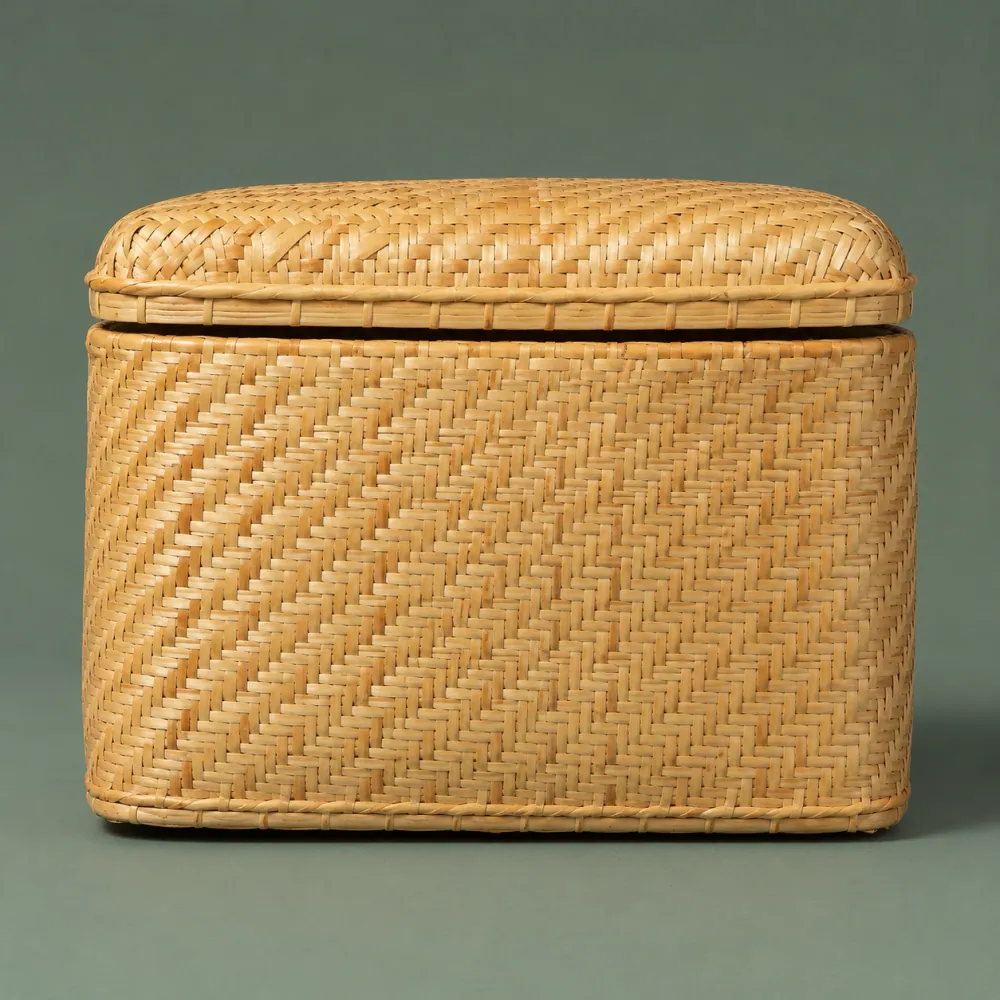
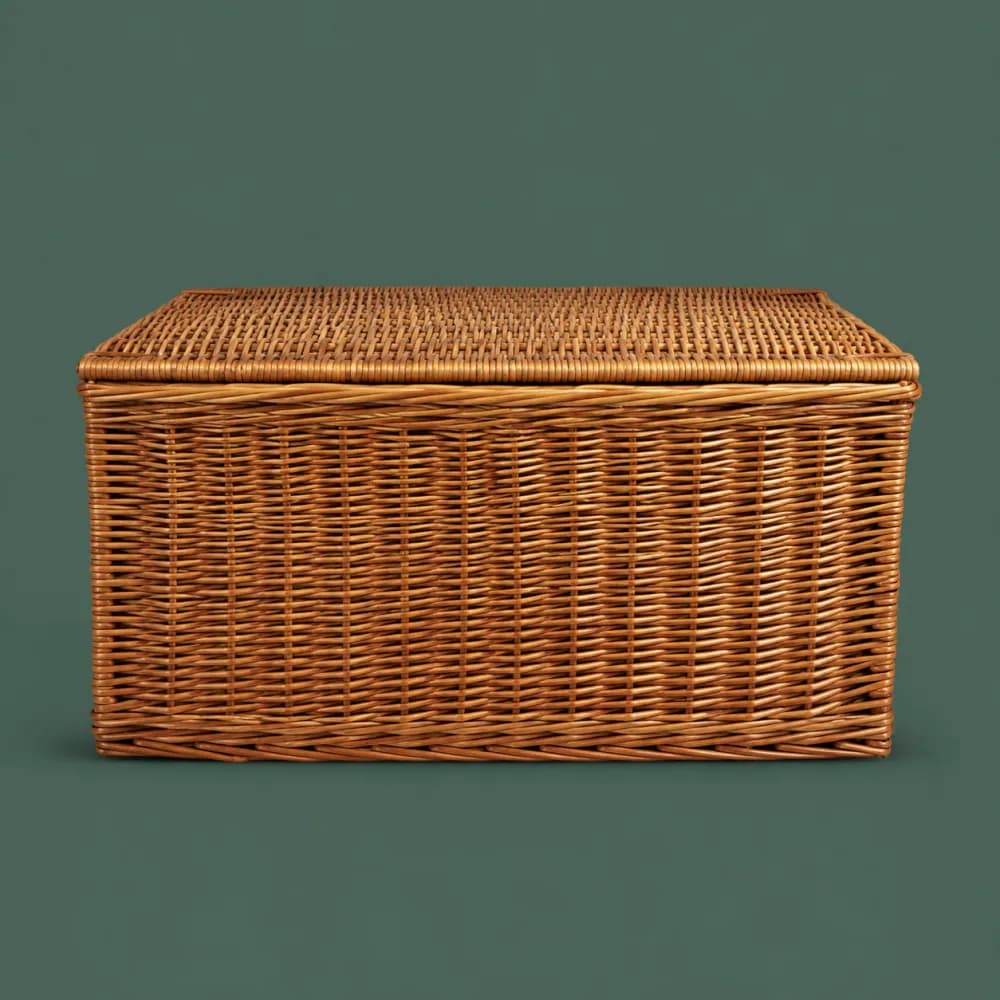
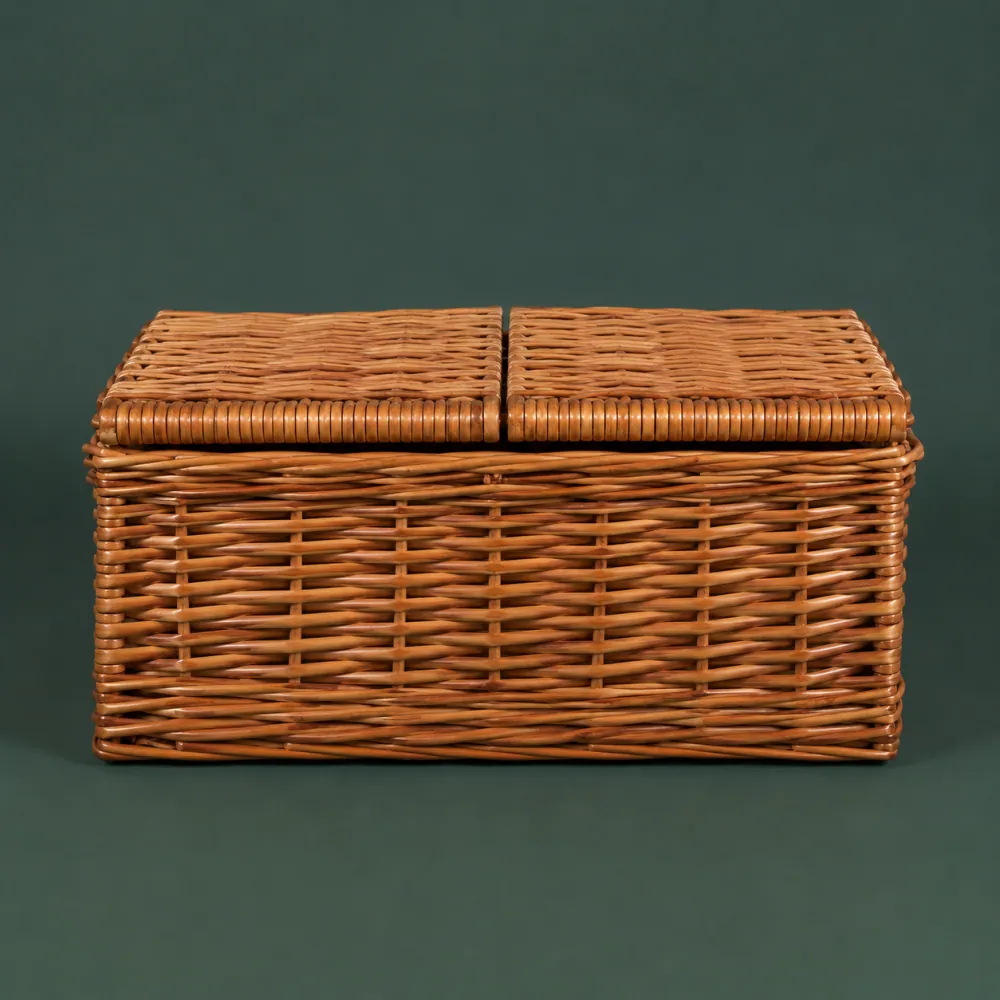
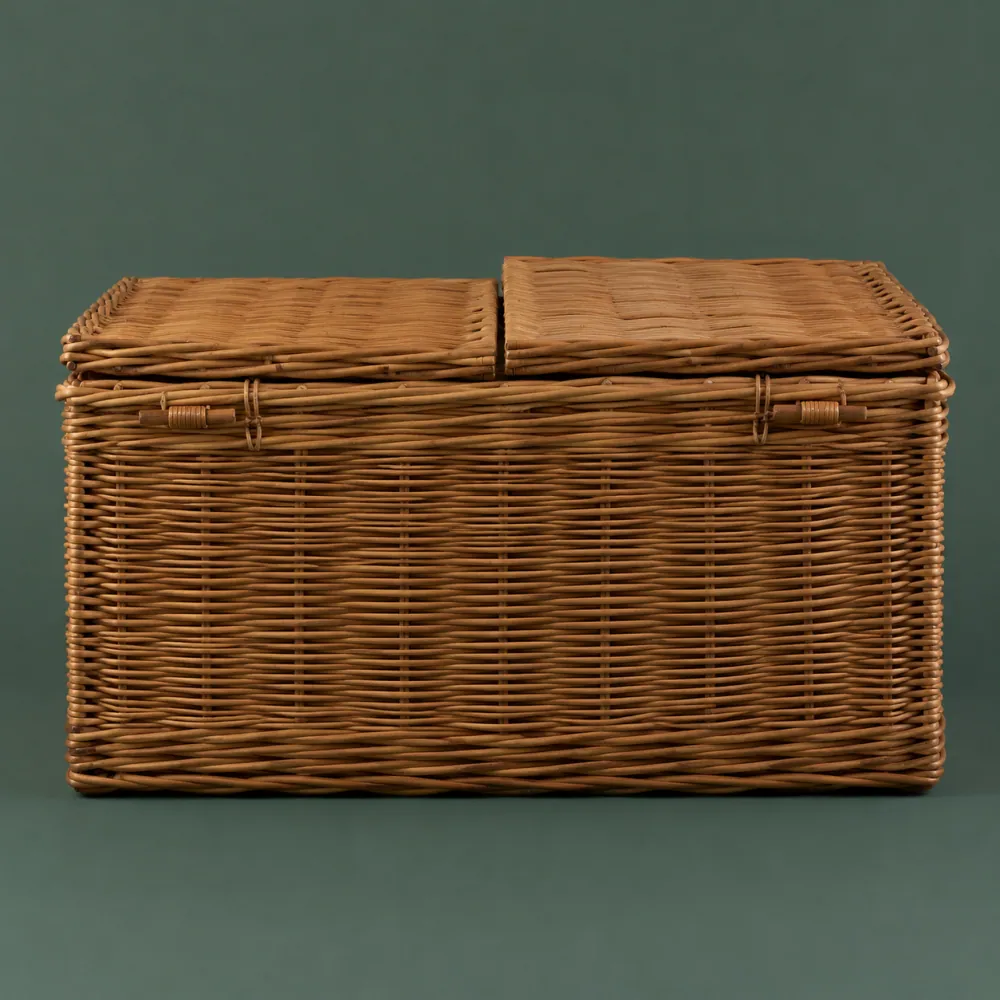
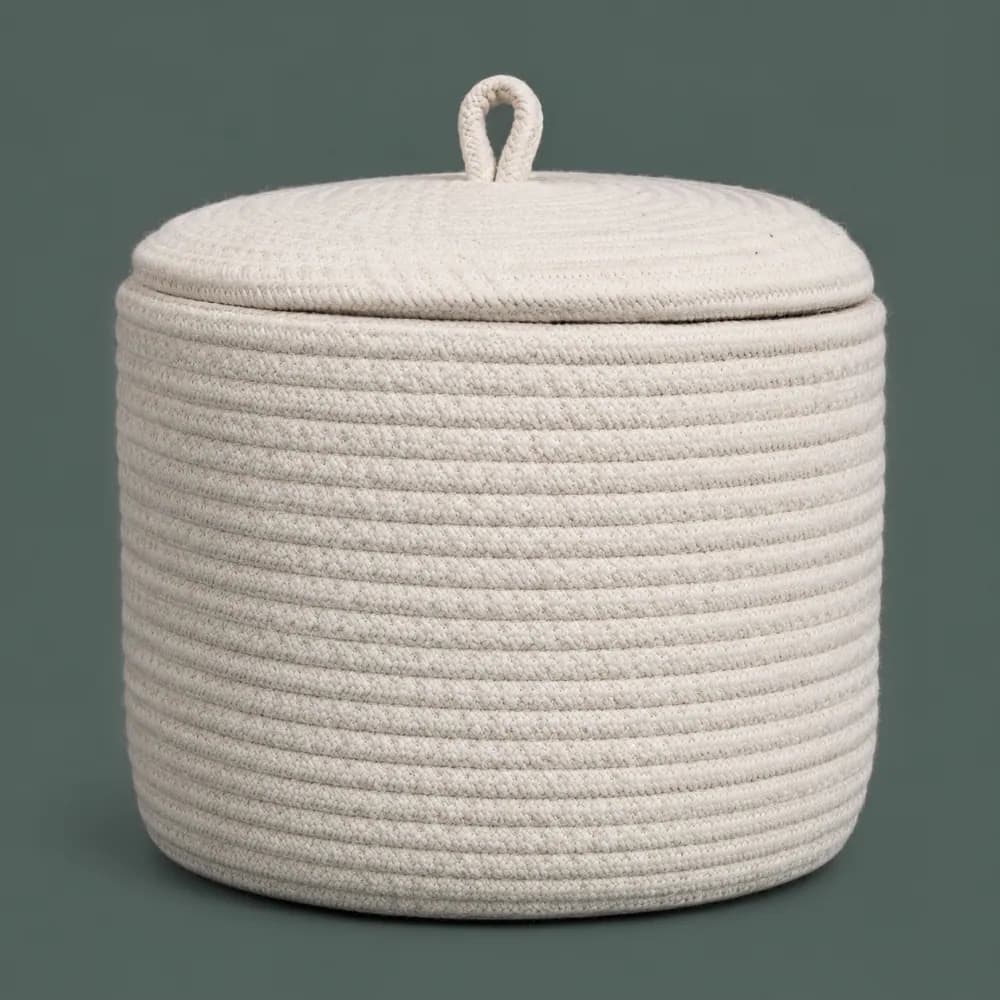
 1 of 1 — the photograph is this piece
ON-E-08 · Lidded
Cord Lidded Box 320
Spun and plied cotton rope. The fibre has been cleaned, carded, spun and twisted, so it carries far less biosecurity risk than raw plant material.
Measured −8 mm against the drawing at mouth diameter (widest point). All three measured points are below, along with the flaw you can see in the photographs.
Where this one can go
This is a processed-fibre piece — spun cord rather than raw plant material — so it goes everywhere we ship. Pick your country to confirm.
Shipping is added at checkout. Import duties and taxes raised by your own country are not included and are yours to pay. Hong Kong charges no sales tax on this sale.
Thirty days to change your mind — our promise, and it does not cut down any statutory right you have where you live. Returns · Delivery
Against the drawing
Measured with a digital calliper forty-eight hours after the weaving finished, at 22 °C and 50–60% relative humidity. Natural fibre moves with humidity; the same piece read in a damp room measures larger.
| Point | Drawing | This piece | Difference |
|---|---|---|---|
| Mouth diameter (widest point) | 320 | 312 | −8 mm |
| Height (excluding handle) | 250 | 246 | −4 mm |
| Base diameter | 280 | 272 | −8 mm |
We do not grade pieces by how close they came, and this one costs exactly what its opposite number costs. Why
This piece, close up
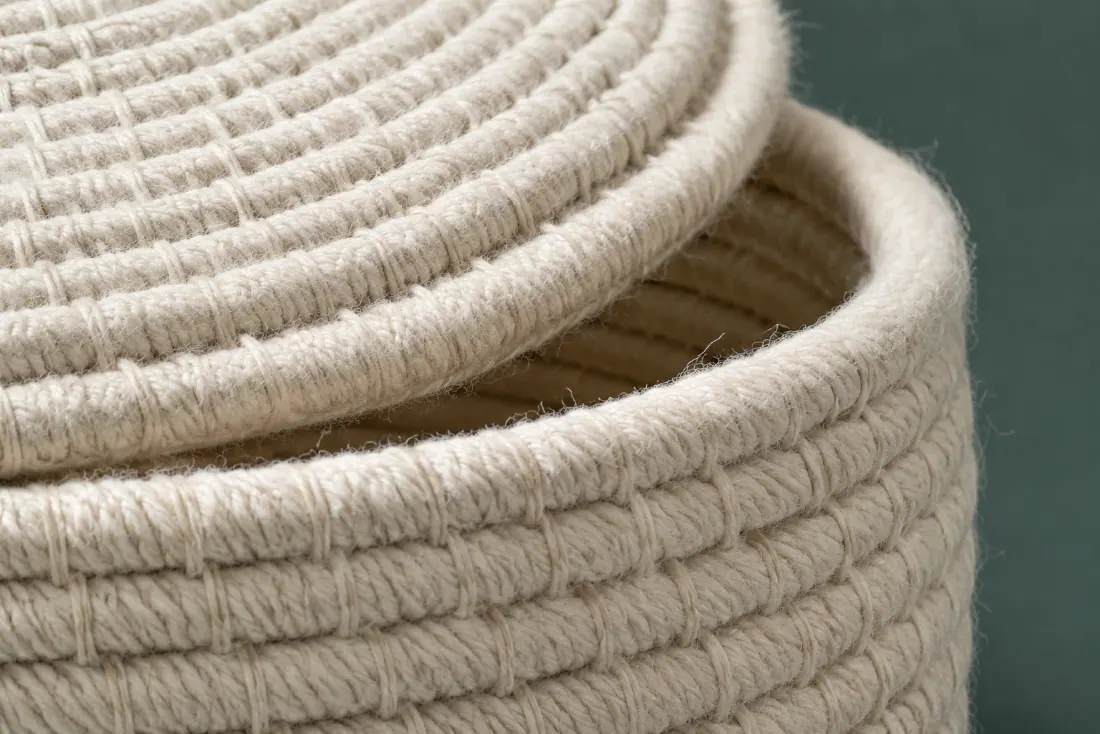
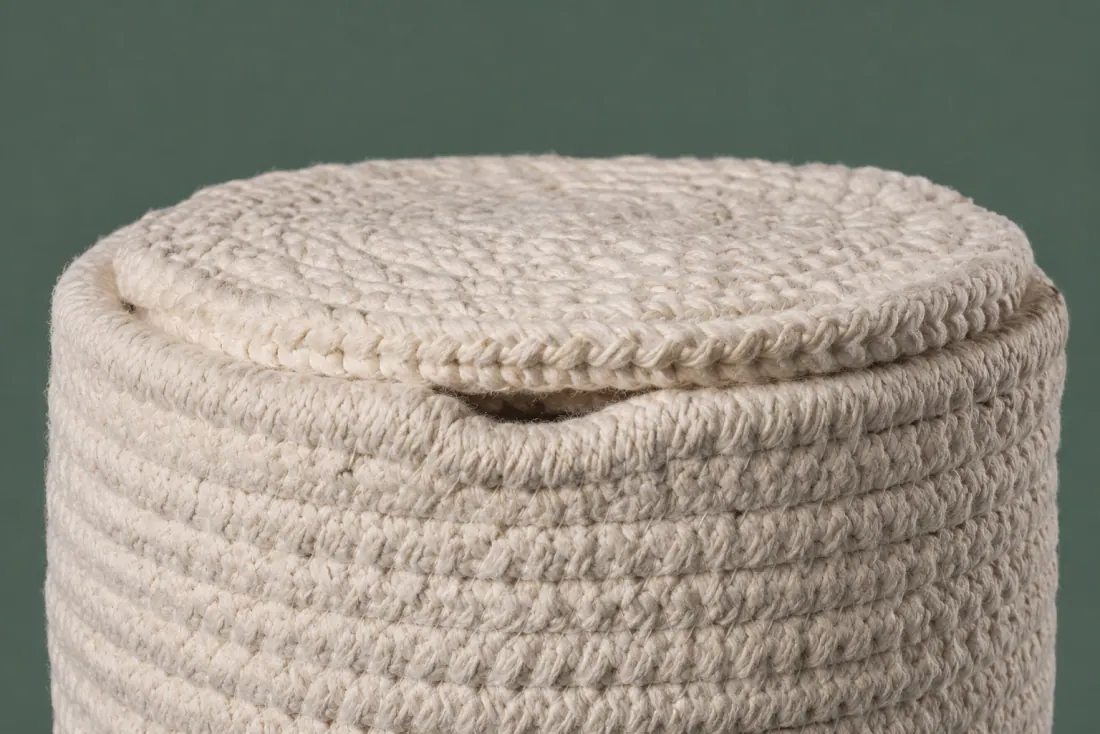
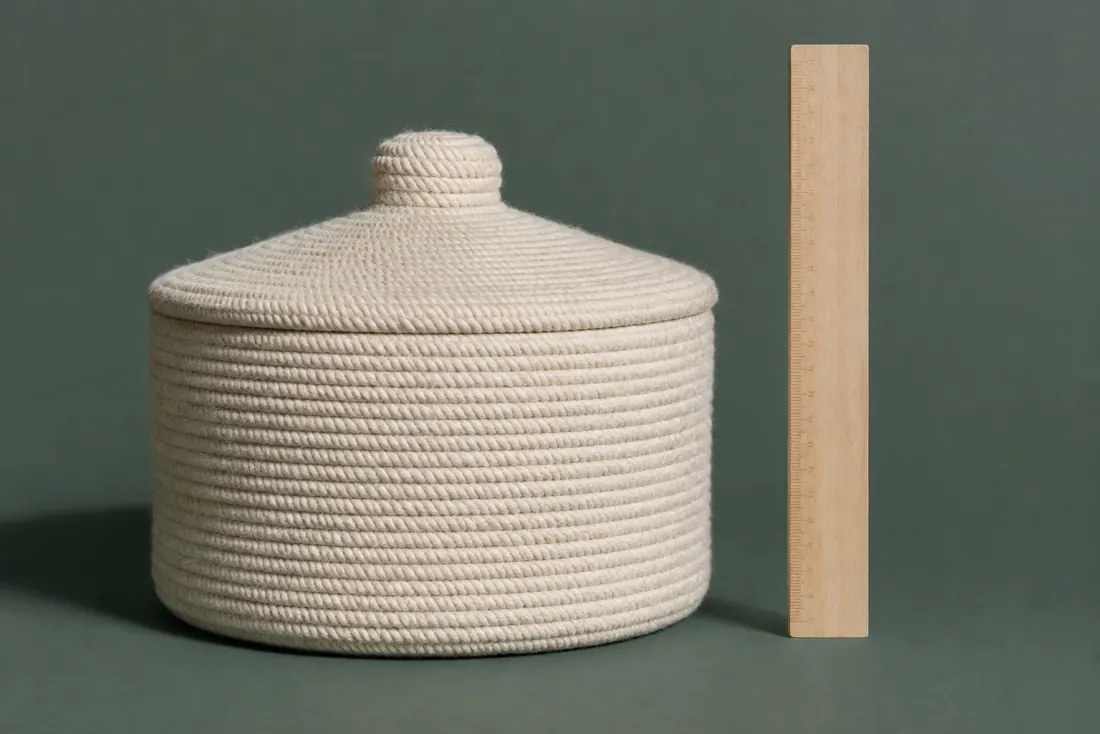
What was hand work
| Step | What it covers | On this piece |
|---|---|---|
| Preparing the fibre | Splitting, soaking, scraping to thickness | By machine |
| The weaving itself | The body of the piece | By hand |
| Rim and edge | Binding, borders, closing off | By hand |
| Colour | Whether anything was added to the fibre | None |
| Surface | Wax, seal or nothing at all | None |
| Hardware | Any bought-in metal or fitting | None |
| Base or stand | Any bought-in structural part | None |
The weaving is hand work on every piece here — that is the premise of the shop. The other six steps vary, and we say which is which rather than calling the whole thing handmade. Where we draw the line
Four things that belong to this one only
- Where the weave runs
- Body and lid coiled in the opposite hand to its pair; both tails are buried at the back.
- How the colour falls
- Undyed cotton throughout, with a grey spool mark on the lid.
- What you can see wrong with it
- The lid drops 2 mm inside the body rim on one side rather than sitting on it. One stitch loop stands proud on the lid centre.
- Woven by
- W-07 — a code, not a name. We do not publish the names of the people who weave for us.
Numbers and limits
- Carrying load
- 6 kg
- Lifted by the rim or handle. The handle fails first, so this is the lower figure.
- Recorded weaving time
- 26 h
- The weaving only. Preparing and drying the fibre are not counted.
- Outer carton
- 420 × 420 × 350 mm
- Large parcel. Shipping is charged on volumetric weight.
Not made for children, not made for direct contact with food, and not made to carry structural load or to be sat or stood on.
What this material does over time
The long version →- Cracking
- Rattan and bamboo lose water in a heated or air-conditioned room and split. Keep the room between 40% and 65% relative humidity.
- Deforming
- Loaded or hung for long enough, a woven wall dishes and a rim pulls out of round. The carrying figure below is the figure, not a suggestion.
- Darkening
- Undyed fibre in daylight turns deeper and greyer. That is oxidation and it does not reverse.
- Mould
- Above about 75% relative humidity, natural fibre grows mould. Dry it, brush it, and treat it early.
- Insects
- Plant fibre can be bored by insects. We do not claim any piece is proof against them.
- Burrs and broken strands
- Strands lift and break with use. Trim a burr flush and splice a break with repair cord.