Last updated 20 August 2026
Where hand work ends
“Handmade” is the easiest word in this trade to stretch. So we do not use it as a single claim. Seven steps go into every piece, and each piece’s page marks each of the seven as hand work or machine work.
Questions about this page
Hong Kong Bolin Rui International Trade Limited
support@starlivehk.com
[+852 number to be filled in before launch]
Room 1508, 15/F, Office Tower II, Argyle Centre, 625 Nathan Road, Mong Kok, Kowloon, Hong Kong
The registered office is an address of record. It is not open to callers.
Contact form →The seven steps
01 — Preparing the fibre
What it covers. Splitting cane, soaking it, scraping bamboo strips to thickness, boiling and stripping willow rods.
Where we stand. Hand or machine. On most pieces here the splitting and scraping is done by machine, because a machine splits more evenly than a person does. We say so on each piece.
02 — The weaving itself
What it covers. The body of the object: randing, twining, coiling, plaiting, knotting.
Where we stand. Hand on every piece on this site, without exception. That is the premise of the shop, and the build refuses any record that says otherwise.
03 — Rim and edge
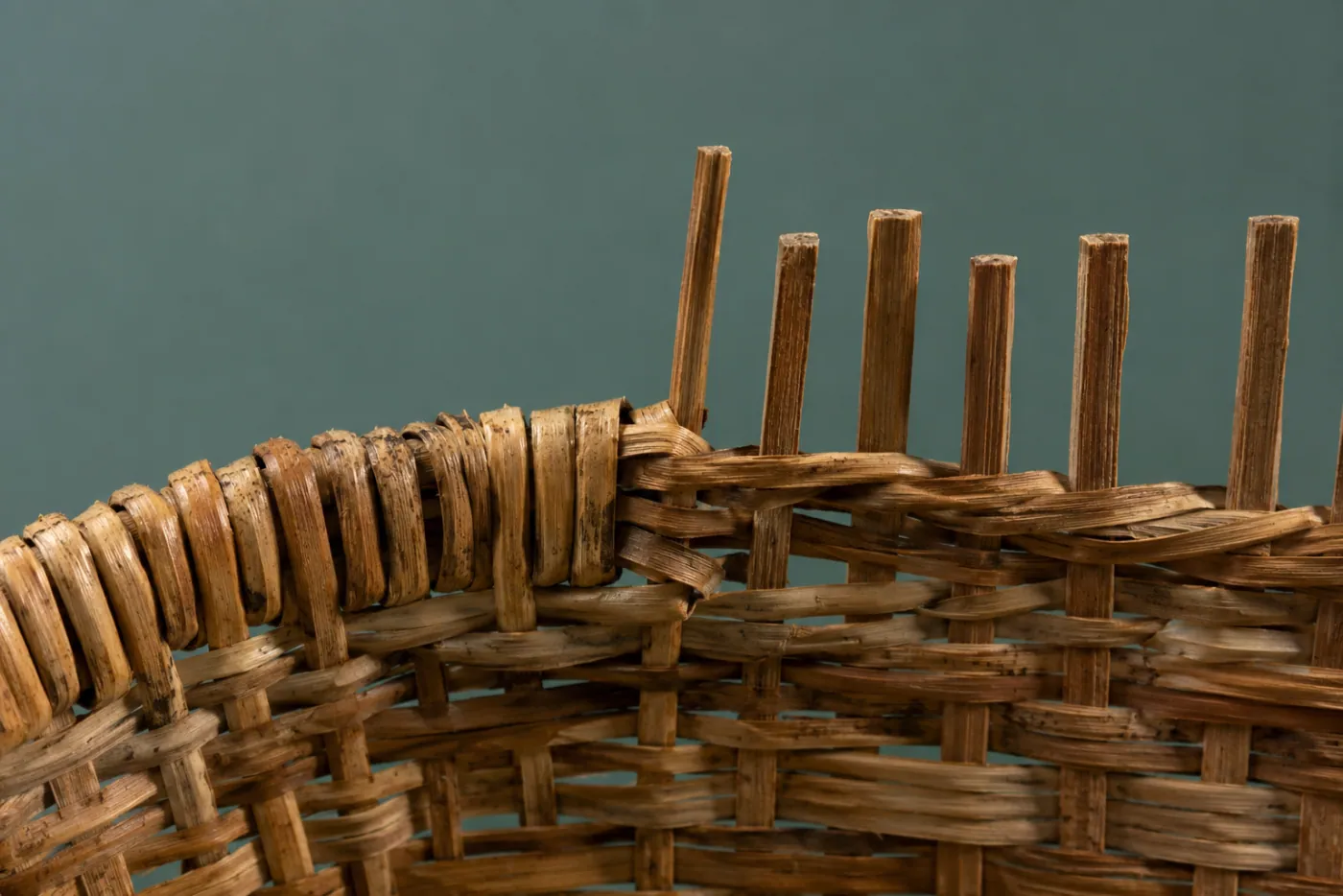
What it covers. Borders, bindings, closing off the stakes, finishing a coil.
Where we stand. Hand on every piece we currently list. It is the step where a machine finish is most obvious, and it is where most of the published deviation comes from.
04 — Colour
What it covers. Anything added to change the colour of the fibre.
Where we stand. Every piece currently listed is undyed. Where a piece is dyed we say whether it was dipped by hand or dyed industrially.
05 — Surface
What it covers. Wax, seal, spray, or nothing at all.
Where we stand. Every piece currently listed is unsealed. Wax is sold separately as a care item so that you can decide.
06 — Hardware
What it covers. Metal fittings, hinges, catches, handles that were not woven.
Where we stand. None on any piece currently listed. Where a piece has a bought-in part we say so and say what it is.
07 — Base or stand
What it covers. A structural part that was not woven — a timber base, a metal ring, a frame.
Where we stand. None on any piece currently listed.
Phrases you will not find on this site
Under the Trade Descriptions Ordinance (Cap. 362) a false trade description is a criminal matter in Hong Kong, enforced by Customs and Excise, not a marketing risk. The following are blocked in the build: the site does not compile if any of them appears in the source.
- Any claim that a piece is entirely the product of hand work when the fibre was machine-split.
- Any reference to a secret technique, a method passed down through generations, a named master, or an age in centuries. We cannot show you any of it, so we do not say it.
- Any invented account of where a piece was made, by whom, or how long the practice has existed.
What we do publish for each piece is the recorded weaving time, the code of the person who wove it, where the weave starts and closes, how the colour runs, and what is visibly wrong with it. See how we measure.
Why the weaver is a code and not a name
Each piece carries a code such as W-03. It identifies one person consistently across every piece they wove, so the record is real, but it is not their name. Publishing the names of the people who weave for us would put their personal data on a public website for a marketing benefit they did not ask for. If you have a question about a particular piece, write to us and we can answer it without that.